July 29, 2026
In the digital world,
most companies are not operationally ready to succeed with AI
Is your company operationally ready for AI?
The 2026 Deloitte State of Enterprise AI report documented three key challenges companies are facing to be operationally ready to successfully deploy AI, GenAI & Agentic AI.
- 83% of companies said their data quality, processes and workflows were not ready for AI
- 74% of companies said they are struggling to demonstrate ROI from their AI investments
- 77% of companies said that their governance capabilities and processes were not keeping up with the avalanche of new AI products, services and applications
At a high level, AI operational readiness illustrates how well prepared a company is to deploy, manage and scale AI across its strategy, infrastructure, data, governance, talent and culture.
The AI operational readiness gap isn’t about the technology it’s about the “foundational work” most companies have been postponing for years including data quality and accessibility, operating model processes & workflows, executive sponsorship of AI initiatives, governance embedded in the AI development and implementation process, AI proficient skills and capabilities within the company and a culture that finds the right balance between innovation and secure compliant utilization of AI.
How does your company create business value today?

One of the biggest reasons companies have struggled with AI is that they have treated it as a technology implementation, not a business value creation challenge and opportunity.
Here are some core foundational business value creation questions to get you started:
- What are the different ways our company creates value today?
- What internal or external factors could dilute that value?
- What skills and capabilities do we need to deliver that value?
- What can we do to increase that value and what role can AI play in that effort?
Over the past 15 years, my brother, Geoffrey Moore, has articulated three primary sources of value creation for any business across any industry as shown on the slide below:
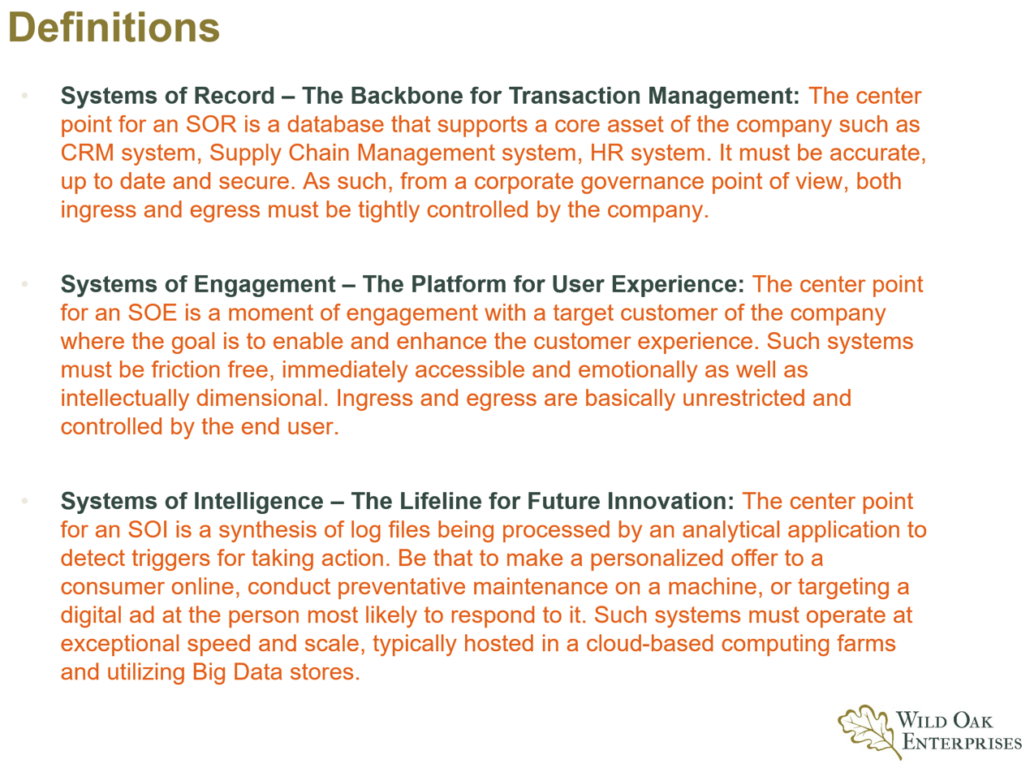
Each system creates business value differently and therefore creates different internal constraints and bottlenecks to AI operational readiness. By using this framework, senior leadership teams and boards of directors can assess and differentiate the company’s AI operational readiness needs across all three value creation categories. Simply put, there is no one-size-fits-all solution to AI operational readiness.
Cisco AI Readiness Index
One place to start your AI operational readiness planning is to assess the current state of your company’s AI readiness. One of the most established resources is the Cisco AI readiness Index which is now in its third year of operation.
The index is built on six core pillars:
Strategy
- Align AI initiatives with core business objectives
- Establish executive ownership
- Prioritize use cases by complexity & business value
Infrastructure
- AI-ready APIs
- Reliable data integrations and pipelines
- Governance embedded by design
Data
- Structure, clean, and de-duplicate data to ensure AI performance
- Make internal knowledge AI-readable and retrievable
- Define data governance, ownership, and safeguards
Governance
- Real-time monitoring and visibility of AI logic and outputs
- Embedded security controls and risk mitigation
- Built-in testing and explainable features
Talent
- Invest in AI literacy and skills training
- Redefine human roles around AI collaboration
- Establish human-in-the-loop (HITL) oversight
Culture
- A defined plan for change management
- Prioritize leadership and employee trust as part of AI transformation
- Treat deployment as the start of AI optimization and responsible AI
In reviewing the overall results of AI-readiness, Cisco has created four categories of performance and the percentage of companies in each category:
Pacesetters 13% – Fully prepared
Chasers 36% – Moderately prepared
Followers 48% – Limited preparedness
Laggards 3% – Unprepared
The fact that over half the companies have limited or no preparedness speaks volumes as the why so many companies are struggling to be operationally ready to succeed with AI. By contrast Pacesetters are 4 times more likely to move pilots into production and 50% more likely to see measurable returns from their AI investments.
Closing the AI Operational Readiness Gap

Closing the AI operational readiness gap will enable organizations to make a successful transition from a pre-AI company to a post-AI company. The key questions aren’t just technical; they are strategic and operational. For example, do we have the right operating model and is it AI ready? Have we found the right balance between governance and standard operating procedures? Have we organized our teams appropriately? Do we understand the overall costs of scaling AI from pilots to production?
Boris Evelson, vice president at Forrester says too many organizations are bolting AI onto existing processes without redefining roles or workflows. “Organizations can either incrementally enhance existing workflows by augmenting capabilities with AI or pursue a more transformative approach by redesigning the process end-to-end.” The latter approach requires a lot of intentionality on how teams are structured and work together across any enterprise.
In our work with senior leadership teams who are committed to closing their AI operational readiness gap, we have used our stairway to heaven model shown below as a guide:

Using our step-by-step model has been helpful in prioritizing AI investments based on dependencies and desired business outcomes. For example, you should not make any AI investments until your data is properly organized and fully AI readable and retrievable. The key is to start with the bottom step and make sure it is operationally AI ready before moving up to make investments in the next step.
The reason so many AI, GenAI & Agentic AI projects have missed their desired outcomes is because they weren’t in service to solving a specific problem or taking advantage of a specific opportunity brought on by this new wave of disruptive digital technologies. They were mostly about trying to deploy a new technology before anyone really understood what it could do and what kind of operational and organizational preparation a company must have in place to do it.
However, as Cisco’s AI Readiness Index results illustrate, those companies (pacesetters) that take a thoughtful approach enable leaders to navigate this shifting landscape with agility, discipline, and operational rigor.
|